Intel Kills 2250 WiMax Chip  

Intel today told its customers that it will stop manufacturing the WiMax Connection 2250 chip (pdf) and the WiMax Connection 2300R radio chip (pdf), reports TG Daily. The news came via a product change notification sent out by the company, announcing an unusually quick phase-out. Final orders were taken today (June 5).
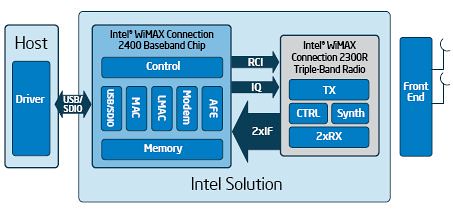
Intel has been among the top-3 investors in Clearwire, the WiMax carrier in the U.S. The company has a significant role in pushing WiMax to the consumers. But WiMAX chip companies Beceem and Sequans have become the overwhelming favorite for use in consumer client devices. Intel has also invested in Beceem.

In a phone call with TG Daily, Intel said that the company will not drop its WiMax chip production, but focus on more recent WiMax chips, the Echo Peak chipset (the Intel WiMAX/WiFi 5150 and 5350), instead. Instead of shipping RF chipsets, like Beceem and Sequans, Intel has focused on delivering platforms encompassing both processing and multimedia capabilities with combined WiFi/WiMAX connectivity on small PCIe Mini Express Cards that slip into Centrino laptops.

According to WiMAX.com, four leading WiMAX semiconductor companies - Beceem, Sequans, GCT and Wavesat- presented their outlook for 4G networks and related silicon at the May 13th IEEE Communications Society panel session entitled, “Semiconductor Evolution to 4G: Mobile WiMAX, LTE, and other 4G technologies.”


Lars Johnsson of Beceem expressed what seemed to be a consensus view of the four semiconductor company panelists: “Wireless is the hard part, silicon is the easy part.” The basic premise is that the algorithms needed to achieve good performance on an OFDMA based wireless broadband link is more difficult then designing the silicon for that same link- especially when the end point is in motion. The broadband wireless design challenge starts with constantly changing signal strength and it gets more difficult once the terminal starts moving.

Some of the wireless design issues Lars identified were: signal tracking (to improve performance under all conditions), channel estimation (allows for better decoding), high-speed mobility, hand-off (from one base station to another), maximum likelihood receiver (improves receiver sensitivity), interference detection, and noise cancellation.

Ambroise Popper of Sequans stated that many core silicon functional blocks, now used in WiMAX (IEEE 802.16e-2005) can be leveraged for 4G: the OFDM modulator/demodulator, FEC, Channel estimation, and MIMO processing. Sequans plans to facilitate a smooth evolution to 4G for WiMAX network operators. They plan to develop and offer converged dual-mode IC’s for backwards compatibility with Mobile WiMAX devices. Those components will fully support the existing 802.16e and either 802.16m or LTE (dependent on market demand). They see efficient low-power implementation and radio performance as key differentiators between 4G and Mobile WiMAX/802.16e.

Meanwhile, Intel is investing $43 million in Japanese WiMax provider UQ Communications, which plans to cover 90 percent of Japan by 2012. It will formally launch the service on July 1, in Tokyo’s 23 wards, Yokohama and Kawasaki, and the Tokyo International Airport. UQ Communications is also backed by KDDI, Japan’s number two cellular carrier, JR East, the major railway operator in Eastern Japan, Kyocera, Daiwa Securities and Tokyo Mitsubishi Bank.

Taiwan’s Vmax is one of 30 WiMAX technologies and service providers worldwide receiving Intel investment. Vmax will primarily sell data cards or MIDs to users in Taiwan.

Only a handful of WiMAX-enabled mobile phones are on display at Computex this week, and some are prototypes such as one running chips by MediaTek, Taiwan’s biggest handset chipmaker. Global Mobile Corp is showcasing handsets supporting WiMAX technology including a dual-mode smartphone, code named MAX 4G, from HTC, the biggest maker of handsets running Windows Mobile. HTC has shipped the MAX 4G to Russia’s WiMAX operator Yota, which launched the services in Moscow and St Petersburg on Monday.

In Taiwan, Global Mobile Corp is set to launch its service next quarter, followed by Vee Telecom Multimedia and the nation’s No. 3 mobile carrier, Far EasTone Telecommunications, by the end of this year.

viagra
free viagra
buy viagra online
generic viagra
how does viagra work
cheap viagra
buy viagra
buy viagra online inurl
viagra 6 free samples
viagra online
viagra for women
viagra side effects
female viagra
natural viagra
online viagra
cheapest viagra prices
herbal viagra
alternative to viagra
buy generic viagra
purchase viagra online
free viagra without prescription
viagra attorneys
free viagra samples before buying
buy generic viagra cheap
viagra uk
generic viagra online
try viagra for free
generic viagra from india
fda approves viagra
free viagra sample
what is better viagra or levitra
discount generic viagra online
viagra cialis levitra
viagra dosage
viagra cheap
viagra on line
best price for viagra
free sample pack of viagra
viagra generic
viagra without prescription
discount viagra
gay viagra
mail order viagra
viagra inurl
generic viagra online paypal
generic viagra overnight
generic viagra online pharmacy
generic viagra uk
buy cheap viagra online uk
suppliers of viagra
how long does viagra last
viagra sex
generic viagra soft tabs
generic viagra 100mg
buy viagra onli
generic viagra online without prescription
viagra energy drink
cheapest uk supplier viagra
viagra cialis
generic viagra safe
viagra professional
viagra sales
viagra free trial pack
viagra lawyers
over the counter viagra
best price for generic viagra
viagra jokes
buying viagra
viagra samples
viagra sample
cialis
generic cialis
cheapest cialis
buy cialis online
buying generic cialis
cialis for order
what are the side effects of cialis
buy generic cialis
what is the generic name for cialis
cheap cialis
cialis online
buy cialis
cialis side effects
how long does cialis last
cialis forum
cialis lawyer ohio
cialis attorneys
cialis attorney columbus
cialis injury lawyer ohio
cialis injury attorney ohio
cialis injury lawyer columbus
prices cialis
cialis lawyers
viagra cialis levitra
cialis lawyer columbus
online generic cialis
daily cialis
cialis injury attorney columbus
cialis attorney ohio
cialis cost
cialis professional
cialis super active
how does cialis work
what does cialis look like
cialis drug
viagra cialis
cialis to buy new zealand
cialis without prescription
free cialis
cialis soft tabs
discount cialis
cialis generic
generic cialis from india
cheap cialis sale online
cialis daily
cialis reviews
cialis generico
how can i take cialis
cheap cialis si
cialis vs viagra
levitra
generic levitra
levitra attorneys
what is better viagra or levitra
viagra cialis levitra
levitra side effects
buy levitra
levitra online
levitra dangers
how does levitra work
levitra lawyers
what is the difference between levitra and viagra
levitra versus viagra
which works better viagra or levitra
buy levitra and overnight shipping
levitra vs viagra
canidan pharmacies levitra
how long does levitra last
viagra cialis levitra
levitra acheter
comprare levitra
levitra ohne rezept
levitra 20mg
levitra senza ricetta
cheapest generic levitra
levitra compra
cheap levitra
levitra overnight
levitra generika
levitra kaufen


[get this widget]

Read More...

AddThis Social Bookmark Button

Saudi Mobily: $100M for Samsung WiMAX  

Reuters reported today that Saudi mobile telephone firm Etihad Etisalat (Mobily) has awarded Samsung a $100 million deal to expand the WiMax network through its broadband subsidiary, Bayanat al-Oula.

The network would be the biggest of its kind in the Middle East both in terms of geographic coverage and user capacity, said Salim Saasouh, Samsung’s Middle East and North Africa regional manager for telecoms and network business. Mobily, which bought Bayanat in 2007, would finance the expansion through a loan.

The deal would expand WiMAX service to 20 cities from the four previously covered by the firm.

“Bayanat’s existing WiMax network serves 30,000 subscribers. With this expansion, we will be able to increase Bayant’s WiMax capacity by at least three times,” said chief executive, Khaled al-Kaf. He said this makes his firm a market leader in Saudi Arabia.

Samsung will deliver 1,400 stations to increase Bayant’s overall number of WiMax stations to 1,800 and will deliver the network before the end of 2009.

According to the GSM World Association, Mobily has the busiest data network on the face of the planet, with 452,000 mobile broadband subscribers by the end of 2009’s first quarter, who consume over 30 terabytes of data a day.

Mobily competes with Saudi Telecom, the largest Arab telecom firm by market value, and Zain Saudi Arabia for mobile telephone users in the kingdom, where mobile telephone penetration exceeds 100 percent.

Meanwhile, Etihad Atheeb Telecommunication, a joint venture between Bahrain’s Batelco and the local Atheeb Trading Group, recently announced the launch of a new nationwide WiMAX 802.16e network in Saudi Arabia using Motorola gear.

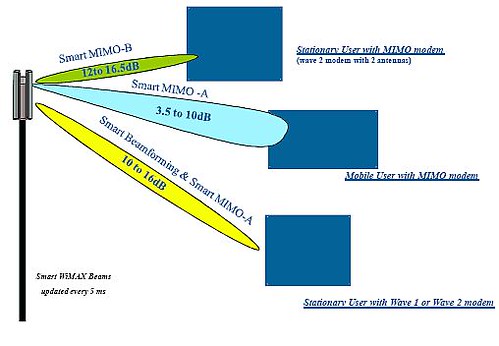
Deployment of the network started in 2008, and includes Motorola’s WAP 800 access point, featuring smart antenna technology (beamforming). Service is beginning in the Saudi capital Riyadh and the Red Sea port city of Jeddah. Etihad Atheeb Telecommunication Company was formed as a new provider of fixed telecoms services in Saudi Arabia, ending Saudi Telecom’s monopoly over fixed line services in the country.

viagra
free viagra
buy viagra online
generic viagra
how does viagra work
cheap viagra
buy viagra
buy viagra online inurl
viagra 6 free samples
viagra online
viagra for women
viagra side effects
female viagra
natural viagra
online viagra
cheapest viagra prices
herbal viagra
alternative to viagra
buy generic viagra
purchase viagra online
free viagra without prescription
viagra attorneys
free viagra samples before buying
buy generic viagra cheap
viagra uk
generic viagra online
try viagra for free
generic viagra from india
fda approves viagra
free viagra sample
what is better viagra or levitra
discount generic viagra online
viagra cialis levitra
viagra dosage
viagra cheap
viagra on line
best price for viagra
free sample pack of viagra
viagra generic
viagra without prescription
discount viagra
gay viagra
mail order viagra
viagra inurl
generic viagra online paypal
generic viagra overnight
generic viagra online pharmacy
generic viagra uk
buy cheap viagra online uk
suppliers of viagra
how long does viagra last
viagra sex
generic viagra soft tabs
generic viagra 100mg
buy viagra onli
generic viagra online without prescription
viagra energy drink
cheapest uk supplier viagra
viagra cialis
generic viagra safe
viagra professional
viagra sales
viagra free trial pack
viagra lawyers
over the counter viagra
best price for generic viagra
viagra jokes
buying viagra
viagra samples
viagra sample
cialis
generic cialis
cheapest cialis
buy cialis online
buying generic cialis
cialis for order
what are the side effects of cialis
buy generic cialis
what is the generic name for cialis
cheap cialis
cialis online
buy cialis
cialis side effects
how long does cialis last
cialis forum
cialis lawyer ohio
cialis attorneys
cialis attorney columbus
cialis injury lawyer ohio
cialis injury attorney ohio
cialis injury lawyer columbus
prices cialis
cialis lawyers
viagra cialis levitra
cialis lawyer columbus
online generic cialis
daily cialis
cialis injury attorney columbus
cialis attorney ohio
cialis cost
cialis professional
cialis super active
how does cialis work
what does cialis look like
cialis drug
viagra cialis
cialis to buy new zealand
cialis without prescription
free cialis
cialis soft tabs
discount cialis
cialis generic
generic cialis from india
cheap cialis sale online
cialis daily
cialis reviews
cialis generico
how can i take cialis
cheap cialis si
cialis vs viagra
levitra
generic levitra
levitra attorneys
what is better viagra or levitra
viagra cialis levitra
levitra side effects
buy levitra
levitra online
levitra dangers
how does levitra work
levitra lawyers
what is the difference between levitra and viagra
levitra versus viagra
which works better viagra or levitra
buy levitra and overnight shipping
levitra vs viagra
canidan pharmacies levitra
how long does levitra last
viagra cialis levitra
levitra acheter
comprare levitra
levitra ohne rezept
levitra 20mg
levitra senza ricetta
cheapest generic levitra
levitra compra
cheap levitra
levitra overnight
levitra generika
levitra kaufen


[get this widget]

Read More...
AddThis Social Bookmark Button

Towards a REAL “4G” Standard  

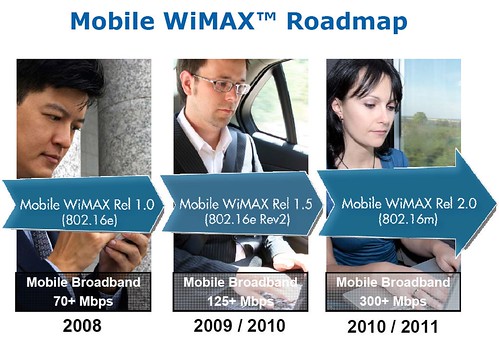
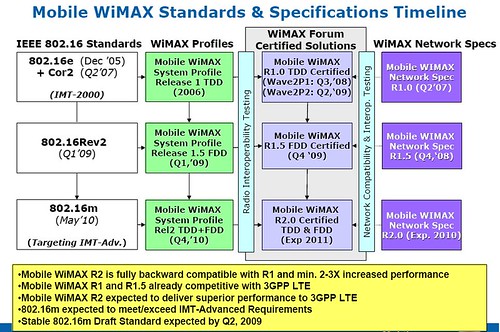
At the 2009 IEEE ComSoc which met on May 13 in Santa Clara (pdf), Intel’s Principal Wireless System Architect, Hassan Yaghoobi, presented a Mobile WiMAX roadmap (pdf) including IEEE 802.16e (Release 1.0), the current version of IEEE 802.16e (Release 1.5), and the next generation, IEEE 802.16m (Release 2.0).

Both the current Mobile WiMAX standard (Release 1.5) and LTE are expected to move from their current status as “3.5G” standards to an official “4G” standard, supported by the International Telecommunications Union in the next few years. The official “4G” standard will be called IMT-Advanced. A true “4G” standard is expected to deliver up to 100Mbps (mobile) and 1 Gbps (fixed).

IMT-Advanced, the official ITU “4G” standard, will actually be an umbrella of “4G” standards, supporting differing (and incompatible) WiMAX and LTE versions.

  • The LTE version of “4G” will be called LTE-Advanced. That standard is still being defined.
  • The Mobile WiMAX version of “4G” will be 802.16m.

The ITU will bless multiple “4G” standards under the “IMT-Advanced” umbrella, including both 802.16m and LTE-Advanced.

Current 802.16m progress includes features such as support for both Full Duplex (on 5 Mhz channels) and Half Duplex FDD on bands such as 700 MHz and AWS, Enhanced Multicast and Broadcast Services and interoperability.

Recent WiMAX Forum activities include:

  • WiMAX Forum is working on enabling Mobile WiMAX FDD through R1.5 Air interface.
  • Mobile WiMAX R1.5 based on IEEE 802.16/Rev2 has been submitted as an update to IMT-2000 OFDMA TDD WMAN to include FDD.
  • Preparation work is underway for development of R2.0 conformance and Interoperability specifications based on IEEE 802.16m.
  • Mobile WiMAX R2.0 is being submitted to ITU as a IMT-Advanced candidate


[get this widget]

Read More...
AddThis Social Bookmark Button

Virgin Mobile: Prepaid Data Plans  

Virgin Mobile USA introduced today a new wireless broadband service over the Sprint’s EV-DO network. Dubbed Broadband2Go, the service offers pay-as-you-go cards with no contracts, roaming charges or activation fees.

Virgin is the first national contract-less carrier to make data plans pre-paid, says the company. But true contract-less mobile broadband service are also available from Clearwire ($30/month) and Leap Wireless ($40/month), although their coverage is more limited.

Virgin’s plans are aimed at casual broadband users who don’t want a contract and don’t need the 5 GB maximum download offered by most cellular carriers.

Virgin’s pre-paid data rate plans include; $10 for 100MB, $20 for 250MB, $40 for 600MB and $60 for 1GB. The $10 bundles will expire ten days after purchase, while the rest of them will expire after 30 days. Top-Up cards can be used to purchase data usage from 100MB to 1 gigabyte on the pay-as-you-go model.

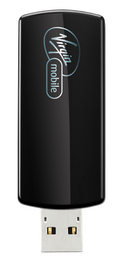
The service will use a Novatel MC760 USB dongle, said to be the world’s smallest EV-DO Rev A device, will be available exclusively at Best Buy for $150. It includes an integrated microSD slot for storing and transporting up to 16 GB of files.

Most cell carriers offer 5 GB at $60 per month, under a 2-year contract.

On Monday, Sprint said it would also offer enterprises a 500 MB 3G broadband access plan for $40, more than doubling the data cap offered by VZW and AT&T’s similarly priced plans.

Engadget Labs tested the cellular modems of each of the four major carriers and proclaimed “The best mobile broadband carrier in America was Verizon. Based on coverage alone, they liked Verizon best (from a national standpoint) and AT&T second. They used the following data cards and plans:

All four major US carriers offer capped mobile broadband, topping out at 5GB of throughput per month.

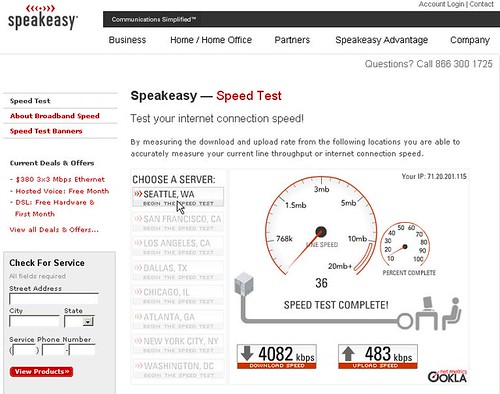
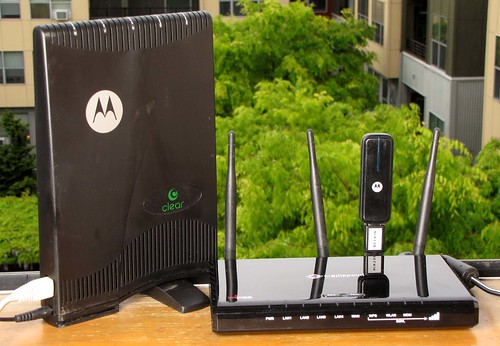
I live in Portland, Oregon, and have two (truly) unlimited wireless broadband services from Clearwire for a total of $55/month (plus $10/mo for device rental). They each typically deliver 3-4 Mbps down and 500Kbps up — with no caps. One client is a Motorola USB WiMAX dongle and the other is a Motorola residential WiMAX modem. They work well. I have been using Clear’s WiMAX service since December 1st, 2008, and have experienced no significant problems so far.

Clear also is running a big expensive advertisement on this site, which — if truth be told — disposes me to be sympathetic. I’m not adverse to telling the truth, however. If problems or issues arise with Clear’s service, I’ll report them.

viagra
free viagra
buy viagra online
generic viagra
how does viagra work
cheap viagra
buy viagra
buy viagra online inurl
viagra 6 free samples
viagra online
viagra for women
viagra side effects
female viagra
natural viagra
online viagra
cheapest viagra prices
herbal viagra
alternative to viagra
buy generic viagra
purchase viagra online
free viagra without prescription
viagra attorneys
free viagra samples before buying
buy generic viagra cheap
viagra uk
generic viagra online
try viagra for free
generic viagra from india
fda approves viagra
free viagra sample
what is better viagra or levitra
discount generic viagra online
viagra cialis levitra
viagra dosage
viagra cheap
viagra on line
best price for viagra
free sample pack of viagra
viagra generic
viagra without prescription
discount viagra
gay viagra
mail order viagra
viagra inurl
generic viagra online paypal
generic viagra overnight
generic viagra online pharmacy
generic viagra uk
buy cheap viagra online uk
suppliers of viagra
how long does viagra last
viagra sex
generic viagra soft tabs
generic viagra 100mg
buy viagra onli
generic viagra online without prescription
viagra energy drink
cheapest uk supplier viagra
viagra cialis
generic viagra safe
viagra professional
viagra sales
viagra free trial pack
viagra lawyers
over the counter viagra
best price for generic viagra
viagra jokes
buying viagra
viagra samples
viagra sample
cialis
generic cialis
cheapest cialis
buy cialis online
buying generic cialis
cialis for order
what are the side effects of cialis
buy generic cialis
what is the generic name for cialis
cheap cialis
cialis online
buy cialis
cialis side effects
how long does cialis last
cialis forum
cialis lawyer ohio
cialis attorneys
cialis attorney columbus
cialis injury lawyer ohio
cialis injury attorney ohio
cialis injury lawyer columbus
prices cialis
cialis lawyers
viagra cialis levitra
cialis lawyer columbus
online generic cialis
daily cialis
cialis injury attorney columbus
cialis attorney ohio
cialis cost
cialis professional
cialis super active
how does cialis work
what does cialis look like
cialis drug
viagra cialis
cialis to buy new zealand
cialis without prescription
free cialis
cialis soft tabs
discount cialis
cialis generic
generic cialis from india
cheap cialis sale online
cialis daily
cialis reviews
cialis generico
how can i take cialis
cheap cialis si
cialis vs viagra
levitra
generic levitra
levitra attorneys
what is better viagra or levitra
viagra cialis levitra
levitra side effects
buy levitra
levitra online
levitra dangers
how does levitra work
levitra lawyers
what is the difference between levitra and viagra
levitra versus viagra
which works better viagra or levitra
buy levitra and overnight shipping
levitra vs viagra
canidan pharmacies levitra
how long does levitra last
viagra cialis levitra
levitra acheter
comprare levitra
levitra ohne rezept
levitra 20mg
levitra senza ricetta
cheapest generic levitra
levitra compra
cheap levitra
levitra overnight
levitra generika
levitra kaufen


[get this widget]

Read More...
AddThis Social Bookmark Button

LTE & Mobile WiMAX Explained  

Confused about the differences between WiMAX and LTE? Don’t worry about it, says Jason Hiner of TechRepublic. Hiner says the major differences are in the business model, not the technology.

Randall Bennett at TechVi, asks Jason Hiner where WiMAX is going to be deployed, and how it compares with competing standard LTE.


Major technical differences between LTE and Mobile WiMAX include:

  • LTE primarily uses FDD for full duplex on two 5 Mhz channels, while WiMAX uses TDD for half duplex on one 10 MHz channel. Both will do voice, but WiMAX is designed around data while LTE is designed around voice.
  • Clear has 120 Mhz available in most major cities on the 2.6 GHz band, while cell carriers have perhaps 12 Mhz (in the 700 MHz band) and another 12 Mhz in the AWS band (1.7/2.1 MHz). That’s a difference of 5 times.

Cell carriers, explains Hiner, will implement voice-centric LTE in the next 2-3 years. Data-centric Mobile WiMAX is expected to be available in New York, Washington DC, Chicago and SF next year.


[get this widget]

Read More...
AddThis Social Bookmark Button

Atlanta Gets Mobile WiMAX  

Clear officially launched its Mobile WiMAX service in Atlanta today, though the system has been operating without publicity for about six weeks, notes the Atlanta Constitution.

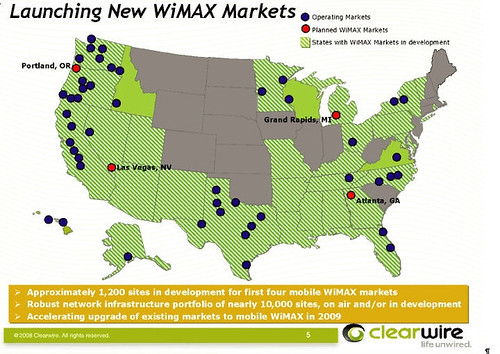
Clearwire hopes to extend its subscriber base by nearly 3 million with the metro Atlanta expansion, company officials said in an recent analyst call. The Atlanta network covers more than 1,200 square miles, the biggest yet.

There are still holes in the huge footprint, which covers everything inside I-285 and more. Service is not yet available in parts of the Northside around Dunwoody and Sandy Springs and DeKalb County around Decatur. A complete network of transmitters that will close those gaps is still being installed, according to the company.

Clear requires a USB ($59) or residential WiMAX modem ($79) with a $35 activation fee. Service rates that start at $10 a day and go to $50 a month.

Clear also announced that soon Panasonic will deliver a Toughbook computer with embedded WiMAX, a dual-mode, 3G/4G modem which will provide CLEAR customers access to Sprint’s nationwide 3G network, and the Samsung Mondi, a mobile WiMAX enabled handheld device.

This is the third market for Clear, which has previously launched systems in Baltimore and Portland, Oregon. Las Vegas is reportedly operational and ready to go. But the “official” launch — including new store openings and a marketing blitz — will begin this summer.

This year Clear will also launch in Chicago, Dallas/Ft. Worth and Philadelphia, and convert existing pre-WiMAX markets in Seattle, Honolulu and Charlotte, N.C., to mobile WiMAX.

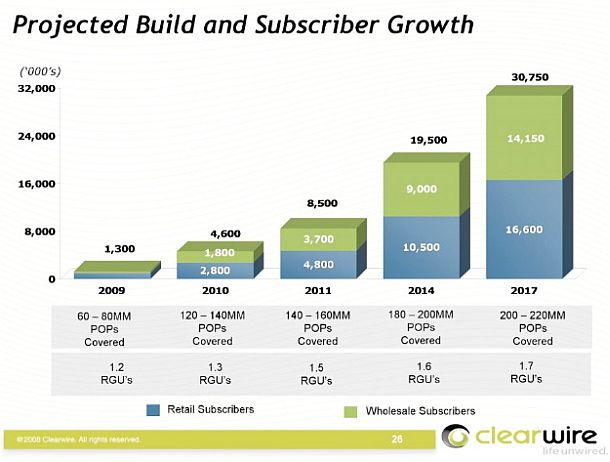
By 2010, Clearwire projects 4.6 millon subs in the United States and close to 20 million subs by 2014.


[get this widget]

Read More...
AddThis Social Bookmark Button

Intel Research Day  

Intel said it can accommodate 40 percent more callers on its WiMax wireless networks by grouping similar voice-over-Internet-Protocol calls together. Grouping the calls means the WiMax base station can issue commands in bulk rather than individually, reducing the overhead of the communications and freeing up capacity for more callers, explains C/Net.

The above map shows the Portland, Oregon, region. The technology was one of many Intel Labs projects that researchers demonstrated at Intel Research Day at the Computer History Museum in Mountain View, Calif., on Thursday.

The company also showed off a new variation on wireless power transmission, running a speaker without any other power source. Two flat copper coils are used in the technology, each tuned to resonate at a particular frequency.

Intel Research Day featured nearly 40 projects and concepts in areas like eco-technology, 3-D Internet, enterprise IT and wireless mobility. A LiveStream episode was available every hour.


[get this widget]

Read More...
AddThis Social Bookmark Button

Clearwire: We’re Gonna Be Big  

Clearwire on Thursday outlined a long-term view of growth for their new WiMAX venture with Sprint, forecasting revenue of over $17.5 billion by 2017.

In a slide presentation to investors, Clearwire said it expected the venture have some 30 million subscribers and cover as many as 220 million people by 2017.

In the nearer term, Clearwire expects to offer coverage to 60 to 80 million people by the end of next year, 100 million U.S. citizens by the end of 2010, and 200 million potential users by 2015.

Clearwire projected average revenue per user at $60 to $65, with free cash flow of $3.8 billion in that time frame. Free cash flow refers to earnings, excluding amortization and depreciation, but including capital expenditures.

CEO Ben Wolff said the company will only need $2 billion to $2.3 billion of additional capital — on top of the $3.2 billion invested by Google, Intel and its cable friends — to complete its planned mobile WiMax network. “Once we close this [Sprint] deal, Clearwire’s average spectrum position will be over 120MHz per market,” said Wolff. Previously the company has been offering services in 30MHz to 33MHz of spectrum per market.

The venture deal is expected to close at the end of 2008. Sprint, Comcast, Time Warner Cable, and Bright House Networks “have already committed to enter into non-exclusive wholesale agreements with New Clearwire.” Under the arrangement, the companies will become mobile virtual network operators (MVNOs) that can resell Clearwire services under their own brands.

By 2014 Clearwire forecasts nearly 20 million Mobile WiMAX customers in a territory covering about 200 million U.S. citizens. ABI Research forecasts that by 2013 there will be some 32 million LTE subscribers world-wide, with the United States getting around one quarter of that total, or about 8 million.


[get this widget]

Read More...
AddThis Social Bookmark Button

WiMAX Open Patent Alliance  

Cisco, Alcatel-Lucent, Intel, Samsung, Sprint, and Clearwire, plan Monday to announce (webcast) the creation of an organization called the Open Patent Alliance, says C/Net.

OPA will form a WiMAX patent pool to help participating companies obtain access to patent licenses from patent owners at a predictable cost. It’s an effort to prevent costly royalty rates that might deter adoption of the wireless technology.

The Open Patent Alliance will issue a call for WiMAX essential patents for inclusion in its patent pool. An independent third-party reviewer will serve as the “patent referee” and will evaluate submitted patents to determine how essential they are to the WiMAX standard and WiMAX Forum profiles. While the OPA initially will focus its efforts on the WiMAX standard, it may work with other industry groups in the future.

Last year Cisco bought Navini which had developed a beamformed MIMO and smart beamforming approach to Mobile WiMAX.

“We haven’t seen a broad proliferation of cellular technology in anything other than handsets because the model is closely held and restrictive,” said Sriram Viswanathan, general manager for WiMax at Intel Capital. The companies hope to make to bring mobile WiMax to MP3 music players, gaming devices, smartphones, and a plethora of other consumer electronics devices.

However, several well-known WiMAX providers are not on the list, notably Motorola, Qualcomm and Alvarion. Motorola officials have not yet said whether they plan to join the new alliance.

Regardless of the number of vendors who join a patent alliance, “it only takes one patent holder to cause problems for the rest,” said industry analyst Craig Mathias . In any technology with numerous players and patents held by various companies, “there will always be the question of whether somebody is stepping on somebody’s intellectual property,” he said.


[get this widget]

Read More...
AddThis Social Bookmark Button

3.65GHz WiMAX Rolls Out  

Webformix announced the launch of several WiMAX transmitters throughout Central Oregon this week. Webformix says they are the first to launch 3.65GHz WiMAX service on the West Coast.

“WiMAX not only allows us to offer a huge increase in speed and range over traditional WiFi technology, but also meets security requirements for HIPAA and military applications,” said Eric Ozrelic, CEO of Webformix. Both businesses and residents can use the service, starting at $40 per month.

The Bend Bulletin reviews area competitors including cable ISP BendBroadband, Qwest DSL and cellular data services and Clearwire. Others include Bend-based I Love My WiFi a WiFi-based service started in 2006 and Community Broadband, based in Redmond.

The 3.65 GHz service will offer competitive rates with BendBroadband and Qwest, says the company.

Webformix WiMAX service is available in Bend now and will be available throughout Central Oregon, including homes and businesses in Bend, Redmond, Prineville, Powell Butte, Madras and Crooked River Ranch, across approximately 2,500 square miles, by July 1st, says the company.

Metro WISP Towerstream has completed a trial using Alvarion 3.65 GHz WiMAX gear, and is planning a major market rollout reports Telephony Magazine.

Towerstream’s wireless backhaul services in New York, Los Angeles, Boston, San Francisco, Chicago, Miami and Dallas have all used pre-WiMAX equipment from Aperto Networks and Alvarion, most in the 5.8 GHz unlicensed frequencies. Towerstream plans to use Alvarion 3.65 GHz gear going forward in all new deployments.

Towerstream won’t retire any of its current equipment, but the ISP will now use WiMAX gear on its T-1 replacement services. For larger companies, Towerstream will continue to use dedicated point-to-point links supplied by DragonWave and Ceragon Networks.

Towerstream’s new 3.65 GHz gear, like others using the 3.65 GHz band, requires all operators to register their equipment in the markets they deploy in. While competitors may use the same spectrum, they must to do it in coordination with one another, creating an unlicensed band with some protections to its users.

Rapid Link is also offering voice and data via 3.65 GHz WiMax service in the Atlanta Metropolitan area to the public.

Matt Liotta, Chief Technology Officer of Rapid Link, states, “We are clearly ahead of the competition and the technology power curve with this offering. Rapid Link is proud to be a licensed WiMax carrier offering this breakthrough service to our foundation of customers in the greater Atlanta area.”


[get this widget]

Read More...
AddThis Social Bookmark Button

Zhone: Line-driven “N” MuniFi  

Zhone Technologies today introduced SkyZhone, a “802.11n” network platform for the metro Wi-Fi space. SkyZhone is designed to serve both licensed public-safety (4.9 GHz) and unlicensed (2.4 GHz) bands.

Zhone’s unique features include;

  • Draft 802.11n with an all-MIMO antenna architecture
  • Integrated DSL backhaul and line powering.
  • Increased capacity and reliability for municipal and commercial Wi-Fi networks.

Telcos may find SkyZhone’s built-in DSL backhaul and integrated line powering an attractive alternative. Instead of nodes inter-connecting through a mesh network, SkyZhone features a star configuration. Telcos can run multiple DSL lines directly to SkyZhone nodes. Each SkyZhone uses at least 2 phone lines and up to 4 phone lines.

The biggest advantage of the SkyZhone solution is probably the amount of backhaul available. Each Access Point has its own backhaul to the wired network. Typically 10 Mbps of backhaul is available.

Digital Subscriber Line Access Multiplexers (DSLAM), in many neighborhoods, connect DSLs to the Central Office. DSLAMs can power and supply SkyZhones with more bandwidth than other alternatives. With the added range of MIMO and “N”, Zhone claims fewer nodes will be required for large scale WiFi networks. They use Broadcom chips in the design.

Zhone also has a complete line of DSLAMs enabling the deployment of services to a range of locations.

Zhone says ACD.net, mid-Michigan’s largest independent Phone and Internet Provider, is using SkyZhone in Lansing and Springfield, Michigan. In Lansing, ACD.net has deployed a public safety 4.9GHz network with a consumer Wi-Fi network for video, voice and data in the 2.4GHz band. In neighboring Springfield, ACD.net is utilizing the system to deliver Internet access at subsidized rates for residents in a 6 square mile portion of the city.

Zhone says their “N” basestation “listens” better, extending the effective range. But without 802.11n on both sides, the effect is likely to be minimal. Still, for nodes that need high capacity, such as serving video, the SkyZhone approach may be an answer.

Other approaches using MIMO include Wavion, a Metro and Rural Wi-Fi vendor promoting beamforming, which recently announced the release of a new SW version supporting self-backhaul.

Wavion’s spatially adaptive base stations have been extended to provide self-backhaul to neighboring base stations using their beamforming technology that leverages six radios and antennas.


[get this widget]

Read More...
AddThis Social Bookmark Button

Motorola: LTE for 700 & 2.6 GHz  

Motorola today said its Long-Term Evolution (LTE) solutions next year will include 700MHz and 2.6GHz products.

Timing is critical for LTE announcements. Next week is the big Telecom show, Nxtcomm. NXTcomm has replaced SUPERCOMM as the one telecom-centric event for network-enabled voice, video, and data.

Operators are loath to install 700 MHz 3G basestations, just to pull them out two years later for 4G, so a solution for the new 700MHz and 2.6 GHz bands would be attractive.

Just as soon as there’s a LTE standard, of course.

Mobile operators are battling Mobile WiMAX which is widely perceived to have a 2-3 lead over LTE. Motorola also announced that its LTE solution will support the future LTE Time Division Duplex (TDD) variant for operators with TDD spectrum holding. “Leveraging our WiMAX TDD infrastructure, we have designed a common LTE platform that is capable of both LTE Frequency Division Duplex (FDD) and TDD, offering global operators the simplicity and economies of scale across markets,” said Darren McQueen, Motorola vice president, Wireless Broadband Access Technologies.

“We believe deploying LTE in the 700 MHz band is mandatory to meet the needs of wireless carriers in the U.S. market as well as a number of other countries globally,” said Darren McQueen, Motorola vice president, Wireless Broadband Access Technologies. “In addition, there is a clear demand for LTE in 2.6GHz spectrum band to meet the needs of GSM carriers that have already secured the spectrum in the global market.”

Motorola says it is engaged in LTE trials with operators in North America, Europe and the Asia Pacific region. The knowledge gained from these LTE trials, coupled with Motorola’s expertise in OFDM, deploying and managing WiMAX networks for Sprint and Clearwire, will contribute to the development of their LTE portfolio, says the company.

Motorola’s LTE base station has a common controller unit that can be shared between WiMAX 802.16e and LTE, plus a variety of radio head solutions to meet specific customer requirements.

The portfolio includes frame based-mounted radios, remote radio heads and tower top radios to support a wide variety of LTE deployment scenarios across newly available spectrum as well as existing GSM, UMTS and CDMA spectrum. Motorola’s flexible eNode B architecture allows many spectrum bands to be supported with limited development investment.

Wavesat, a semiconductor company, in May introduced a family of multimodal chipsets that combine WiMAX, Wi-Fi and migration to LTE. Motorola is working on the same thing. But 4G Is Just One Piece of the Mobile Broadband IP Puzzle. Getting the backend components to interoperate is the tricky bit.

DesignArt Networks launched today a WiMax silicon platform aimed at combating 4G backhaul costs and announced plans for a similar LTE product. Their new System-on-Chip (SoC) platform integrates base station and backhaul capabilities, using spectrum normally dedicated for the last mile for backhaul.

The real battle between WiMAX and LTE will be at 2.6 GHz, which European governments as well as the International Telecommunication Union have identified as broadband wireless bands. Sweden has already auctioned off its 2.6 GHz spectrum, and the UK, Italy, Austria and the Netherlands are planning auctions this year, though there may be delays.


[get this widget]

Read More...
AddThis Social Bookmark Button